Where Mux fits
In its own words, Mux is "Video for developers: an API to stream, encode, analyze and moderate video.". We read its own product and pricing pages and what long-term users report, then judge it on one question: does it help the video make the sale?
What Mux actually is
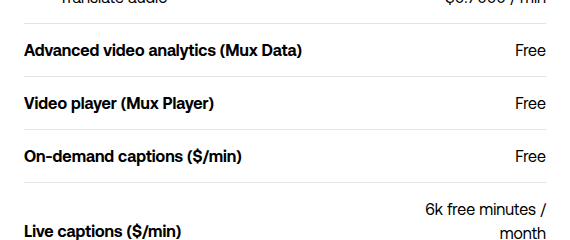
Mux is video infrastructure sold to developers. You upload a file or push a live feed through an API, Mux encodes it into every resolution a viewer's connection needs, stores it, and delivers it as adaptive streaming across a blend of CDNs and its own network. You get a player out of the box, or you point your own player at the stream. On top of that sit Mux Data, a quality-of-experience analytics layer that large teams like Spotify and Warner Bros. Discovery use to spot playback problems, and Mux Robots, a set of AI workflows for captions, chapters, moderation and summaries. The founders built Zencoder and Video.js before this, and it shows in how the product is put together.
Who it is built for
The buyer Mux is designed for is an engineer adding video to a product: a course platform, a social app, a fitness app, an AI video startup. For that person it is close to ideal. The API is clean, the documentation is current, and you can have video playing in your app in a couple of hours. That is the consistent praise across review sites and developer threads, and it is genuine.
The buyer this site is built for is different. If your video's whole job is to sell, on cold paid traffic, then Mux is a component, not an answer. It will deliver the video beautifully. It will not help the video convert.
What it costs to run
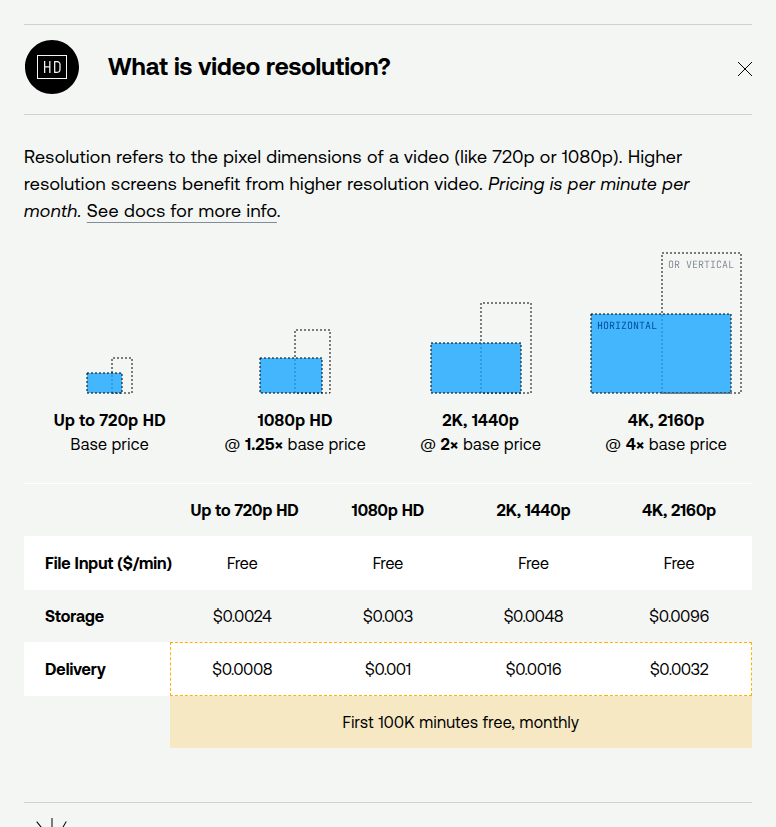
Mux prices per minute of video duration rather than per gigabyte, which is the sane way to reason about a bill. A free tier gives you 100,000 delivery minutes each month with no card. Beyond that, base delivery is fractions of a cent per minute at 720p, storage a little higher, with multipliers for 1080p and up. The catch is that it is a metered utility: encoding, storage and delivery are separate lines, and they add up. Mux is candid about this on its own blog, calling video a company's biggest infrastructure cost. For a low-bitrate talking-head VSL watched by a big audience, run the numbers, because a plain-hosting rival can come in cheaper.
What it will not do for a VSL
This is the part the marketing does not lead with, and the part that matters most here. Mux has no in-video call-to-action, no email gate, no split test you decide on sales, and no way to tie a play to a purchase in a cart. Its analytics measure playback quality and engagement, not revenue. So if you want sound-first autoplay that survives an ad click, a CTA that appears at the pitch, and a report that tells you buyers watched to minute nine while non-buyers dropped at minute two, none of that is here. You would build it, or run a direct-response player in front of Mux.
Where it beats the raw-delivery crowd
Against pure delivery APIs like Cloudflare Stream and Bunny Stream, Mux is the more finished product. The player, the quality-of-experience analytics and the AI workflows are all included rather than assembled, and the developer experience is a step above. If you have decided you are building your own video layer and you want the least painful way to do it, Mux is the strongest option in this roundup. It just sits near the bottom of a list ranked on one question, which is whether the tool helps the video make the sale, and on that question Mux is honest infrastructure that leaves the selling to you.