TrackPlay vs VSLStats
Two direct-response VSL players, same job, wired and priced differently. Which one closes the loop on paid traffic, and when the other is the better call.
Quick answer
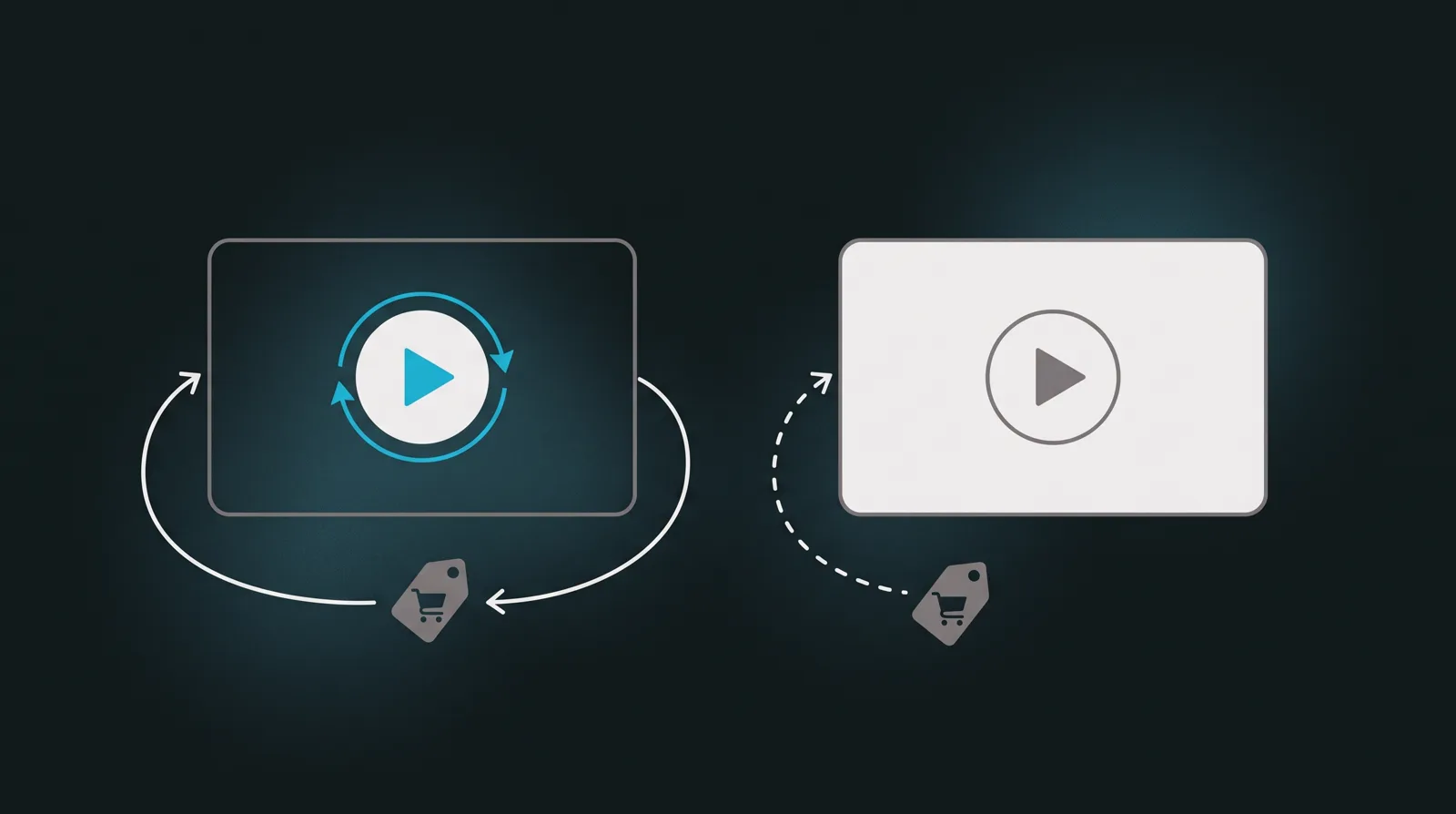
Pick TrackPlay if you want the attribution on every plan from $29 a month, split tests decided on the cart-verified sale and per-second retention split by who actually bought; pick VSLStats if TrackPlay's invite-only signup is blocking you and you want to prove a server-side VSL player on your own funnel through its open $1 trial first.
Side by side
Pros and cons
TrackPlay
What we like
- Split tests are decided on the sale itself, with real statistics, and every variant runs under one embed so your ad links and campaign learning never reset.
- Conversions fire server-side to Meta, TikTok and GA4 at the watch-time milestone you choose, so the ad platform optimizes on real watch behaviour and actual sales instead of a page-load pixel.
- Cart postbacks tie each sale to the exact play that earned it, from seven direct-response carts including ClickBank, Kiwify and Digistore24, server to server.
- Retention is drawn per second and split into buyers versus non-buyers, next to hook rate, hold rate and revenue per play, so you can see the exact seconds to cut or protect.
- Every feature is on every plan, billing is on plays rather than seats, and there is a no-card free plan plus paid plans from $29 a month.
The catch
- It is built narrowly for paid-traffic VSL conversion, not general video hosting or a B2B content library. If your video's job is content marketing rather than a direct-response sale, something like Wistia fits the work better.
- It is a very new product with thin outside proof. The testimonials are on its own site, there is little third-party or Reddit track record yet, and signup is invite-only right now. That is what you would expect of a platform this recent, but it means you cannot lean on independent reviews before you commit paid traffic.
VSLStats
What we like
- The feature set is genuinely built for direct response, not general hosting. Server-side pixel forwarding to Meta CAPI, GA4 and TikTok, per-second retention with a single biggest drop-off point, revenue attributed to individual watch sessions, play gates and timed CTAs, all from one embed. Independent commentary on 2026 VSL marketing describes almost exactly this stack as what now separates the platforms that convert, so on paper it is built around the right things.
- It is cheap for what it is. Starter is $47/mo month to month, or $39 billed annually, against Vidalytics at roughly $149/mo. Every plan opens with a $1 seven-day full-access trial, and the vendor promises a 24-hour warning email before the first real charge and a two-click cancel. For a trust decision, a low-risk way to try it before you pay is the reassuring half.
- It drops in without plumbing. One embed snippet works on ClickFunnels, GoHighLevel, WordPress or any page, with no tag manager and no Zapier, and the server-side events are deduped against the browser pixel so conversions do not double-count. That is far less setup than stitching server-side tracking together yourself.
- Early users are enthusiastic. The reviews that exist are strongly positive: on Trustpilot, early adopters call it the best VSL player and analytics they have used and report quick conversion gains. Read those as encouraging rather than as proof, for the reason in the cons, but the first impressions are good.
The catch
- It is brand new, and the outside proof is thin. VSLStats launched in 2026, operated by Omni Empires FZCO, and the public review trail is about four five-star Trustpilot reviews with nothing on Reddit or Hacker News yet. No long-term reliability record exists to lean on, so you are an early adopter whether you like it or not. The $1 trial exists precisely so you can judge it on your own funnel instead of on someone else's word.
- The marketing oversells the track record. The About page claims 3,400-plus funnels monitored and 6 million-plus tracked viewing sessions while the homepage openly says the company is new and shows four reviews. Those numbers are not something an outsider can verify, and the gap between them and the review count is a reason to keep the healthy skepticism you would bring to any young vendor.
- HookBoost is a deliberate deception, and it is aimed at your own viewer. One headline feature inflates the progress bar so viewers believe they are further through the video than they are, to keep them watching. It may lift watch time, but it is a dark pattern pointed at your audience, and it is the sort of thing that costs trust if a buyer notices it. You can leave it switched off; weigh whether you want a tool that ships it as a selling point.
- The server-side tracking and attribution start on Pro, and no permanent free plan exists. Server-side forwarding, revenue attribution, AI captions, A/B testing and play gates begin on the $97/mo (or $79 annual) Pro tier, not on Starter. Starter at $47 is a real player, but the tracking that sets VSLStats apart sits a tier up from the entry price.
Both sell to cold traffic. One closes the loop
TrackPlay and VSLStats answer the same question, and it is not the one most video tools answer. Both are direct-response VSL players, built to run a video sales letter in front of paid traffic and tell you what the video earned. Neither is a general host you would reach for to serve a portfolio or a course library. If you are on this page, you have already decided you want a player made for selling, and you are down to these two.
Because they share that job, they share most of a feature list: a branded player, sound-first autoplay, timed CTAs and watch gates, per-second retention, server-side event forwarding to the ad platforms, and A/B testing, all from one embed. So the decision is not which one has tracking. Both do. It is how deep the attribution goes, where that attribution sits in the pricing, and how much outside proof you can lean on before you point real ad spend at a brand-new tool.
Our pick for most readers here is TrackPlay, because it puts the attribution on every plan from a lower price and ties the sale back more tightly. VSLStats is a real alternative, and there is one situation below where it is the right call. Here is the whole comparison.
TrackPlay: attribution on every plan
TrackPlay is a VSL player and analytics platform for paid-traffic funnels that ties every play to the sale. It hosts the video behind one embed that drops into any funnel builder, and its first job is to hold a stranger's attention. Sound-first Smart Autoplay gets the hook heard from the first frame, starting muted where the browser blocks audio and turning sound on at the viewer's first touch without restarting the video, with timed CTA cards and watch gates arriving at the moment you set. Unmute rate is reported as its own metric, so you can see whether the hook is actually being heard.
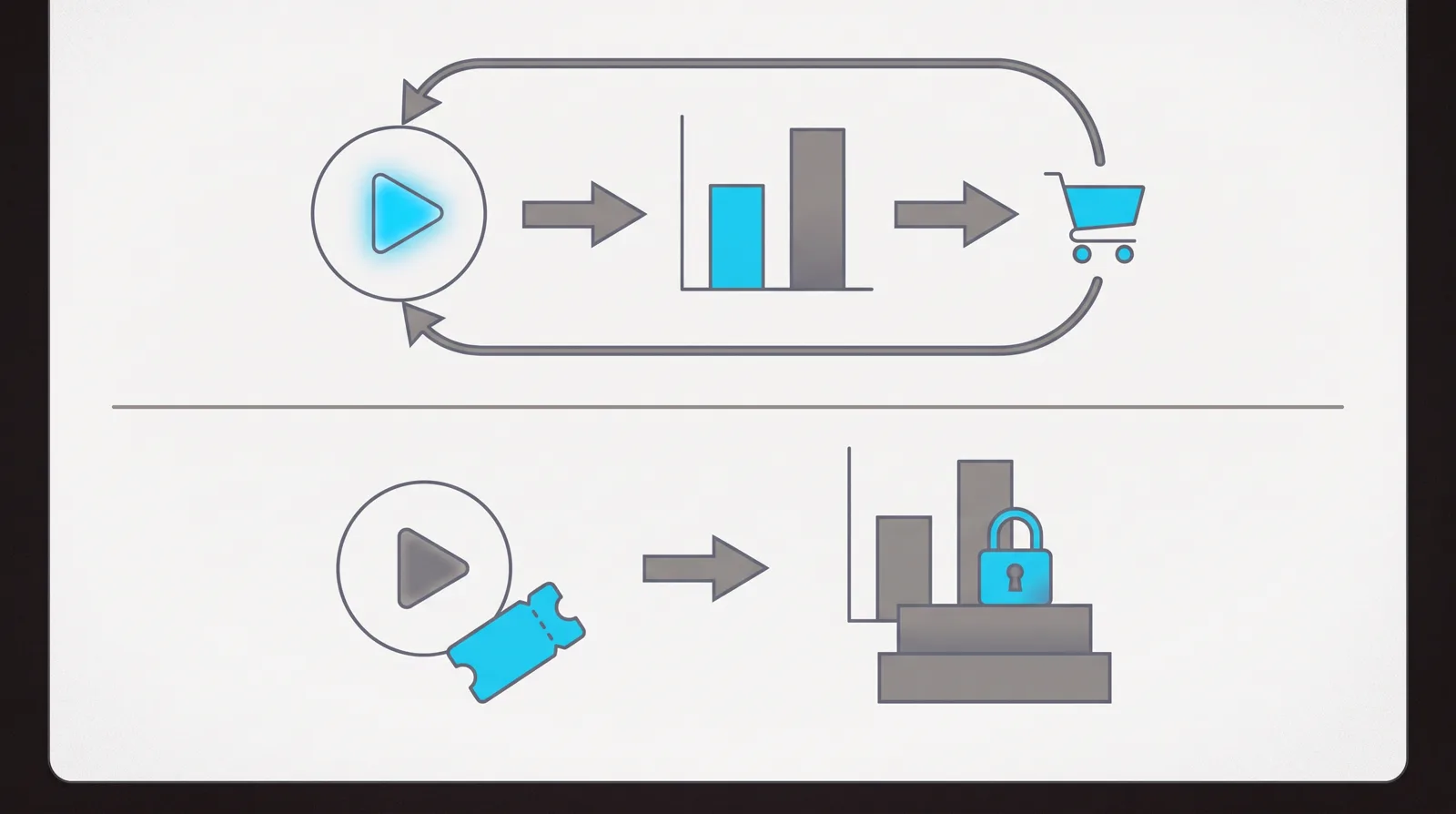
What separates it is the measurement. Retention is drawn per second and split into buyers versus non-buyers, with the median pitch moment marked, next to hook rate, hold rate and revenue per play, so you can see the exact seconds that lose a sale rather than only the seconds that lose a viewer. Split tests run under one embed and are decided on the cart-verified sale with real statistics, a z-test with a p-value and a confidence interval, so a variant wins because it sold more, not because it held attention longer. Because the variants share the embed, your ad links and campaign learning never reset when you change the video.
The attribution is the deepest part. The cart posts the verified sale back to the play that earned it from seven direct-response carts, including ClickBank, ClickFunnels, Kiwify, BuyGoods, Digistore24, WarriorPlus and JVZoo, server to server with no browser in the loop. TrackPlay then fires that conversion server-side to Meta CAPI, TikTok Events API and GA4 at the watch-time milestone you choose, deduped against the browser pixel, so the ad platform optimizes on watch behaviour and the actual sale instead of a page-load. Billing is on plays rather than seats or bandwidth, every feature ships on every paid plan from $29 a month, and there is a no-card free plan of 1,000 plays a month, watermarked, plus a 14-day trial of the paid features.
The honest limit: TrackPlay is narrow by design. It is built for paid-traffic VSL conversion, not general video hosting or a B2B content library, so it has none of the channels, SEO pages or webinar tooling of a platform like Wistia, and it is a poor fit when the video's job is content marketing rather than a direct-response sale. Against VSLStats that matters less than it might sound, because VSLStats is just as narrow and built for the same job, so the limit does not separate the two here. It also carries the newer-product caution both tools share: the testimonials are on its own site, there is little third-party or Reddit record yet, and signup is invite-only right now. That is what you would expect of a platform this recent, and the no-card free plan and 14-day trial are the sensible way to prove the attribution on your own funnel before you commit spend.
VSLStats: the same idea, priced a tier up
VSLStats is the same category of tool, a direct-response VSL player operated by Omni Empires FZCO, built to run video sales letters on paid traffic and measure what they earn. Its pitch is the one every serious VSL tool now makes: a browser pixel lies, because ad blockers and iOS privacy changes silently drop events, so it fires those events server-side instead. It forwards to Meta CAPI, GA4 and TikTok, maps retention second by second to a single biggest drop-off point, attributes revenue to watch sessions, and ships play gates, timed CTAs, AI captions, A/B testing and CRM webhooks, all from one embed. On paper the stack is genuinely built around the right things, and independent commentary on 2026 VSL marketing describes almost exactly this feature set as what now separates the players that convert.
Two things shape whether it is the better buy. The first is pricing. VSLStats has no permanent free plan; the only free way in is a $1 seven-day full-access trial, with a promised 24-hour warning email before the first charge and a two-click cancel. Starter is $47 a month, or $39 billed annually. But the server-side forwarding, revenue attribution, AI captions, A/B testing and play gates, the tracking that separates it from a plain host, start on the Pro tier at $97 a month, or $79 annually, not on Starter. So the real price of the thing you are buying VSLStats for is a tier above its headline number. It is still cheaper than an established player like Vidalytics at roughly $149 a month, but it is not cheaper than TrackPlay, where the same class of tracking is on the $29 plan and on the free plan.
The second is a feature worth knowing before you buy: HookBoost. It deliberately inflates the progress bar so viewers believe they are further through the video than they are, to keep them watching. It may lift watch time, but it is a dark pattern aimed at your own audience, and it is the sort of thing that costs trust if a buyer notices it. You can leave it switched off, and whether you want a tool that ships it as a selling point is a judgment call TrackPlay does not ask you to make.
Attribution: watch sessions vs the cart sale
This is where two similar-looking tools actually diverge. Both forward conversions server-side, so both beat a plain browser pixel. The difference is what they attribute, and how firmly.
VSLStats attributes revenue to watch sessions. It knows a session watched to a certain point and that revenue followed, and it forwards that server-side. That is a real improvement on a page-load pixel, and for a lot of funnels it is enough.
TrackPlay ties the specific cart-verified sale to the specific play that earned it, posted server to server from the seven named carts, and then decides split tests on that sale with statistics rather than on watch time. The retention curve is split by who actually bought, so you are reading the video against buyers, not against the crowd. If reading ad spend against real sales is what sends you to a VSL player over a plain host, that tighter loop is why TrackPlay wins this pairing, and it is available on every plan rather than gated a tier up.
Trust and access: two very new tools
Neither tool has the track record you would want before committing a live offer. Both launched recently, both lean on on-site testimonials, and neither has a meaningful Reddit or Hacker News footprint yet. Treat any large usage number on either vendor's site with the skepticism it deserves. VSLStats' own About page claims thousands of funnels monitored and millions of tracked sessions while its homepage openly says the company is new and shows about four Trustpilot reviews. Those figures are not something an outsider can check, and the gap between them and the review count is a reason for caution, not confidence.
Access is the one place VSLStats has the clear edge, and it decides the case where you should pick it. TrackPlay is invite-only right now; its registration page asks for an invitation code, so you cannot simply sign up and try it today. VSLStats' $1 seven-day trial is open to anyone. If you want to prove a server-side VSL player on your own funnel this week and TrackPlay's gate is in your way, VSLStats lets you do exactly that for a dollar. That is a genuine reason to choose it, and it is the honest counterweight to everything above.
Which one for you
Pick TrackPlay if you run VSLs on paid traffic and want the attribution on every plan from $29 a month: split tests decided on the cart-verified sale, per-second retention split by buyers versus non-buyers, and the sale posted server to server from your cart back to the play that earned it. For most readers on this page, that tighter loop at a lower price is the deciding factor.
Pick VSLStats if TrackPlay's invite-only signup is blocking you and you want to put a server-side VSL player on your own funnel now, through the open $1 trial, and you are comfortable that the tracking sits on its Pro tier and that HookBoost is in the box. The feature set is real and cheaper than the old-guard players, and the trial is your diligence.
Read the full TrackPlay review for the complete attribution workflow, and the VSLStats review for where its evidence still thins out.
Pricing, compared
Both meter usage rather than seats, but they meter different things and gate the tracking differently.
TrackPlay
Billing is on plays, and every feature is on every paid plan. Paid plans start at $29 a month, and there is a no-card free plan of 1,000 plays a month with a watermark, plus a 14-day trial of the paid features. The point that matters against VSLStats: the server-side attribution, the buyers-versus-non-buyers retention and the sale-decided split tests are all on the entry plan and the free plan, not held back for a higher tier.
VSLStats
There is no permanent free plan. Entry is a $1 seven-day full-access trial, then Starter at $47 a month ($39 billed annually), Pro at $97 ($79 annually) and Enterprise at $197 ($159 annually), with an Agency plan at $397 a month. The catch is that the server-side forwarding, revenue attribution, AI captions, A/B testing and play gates begin on Pro, so the working price for what you came for is $97 a month, or $79 on an annual plan.
Cheaper than an established player like Vidalytics at around $149 a month, VSLStats still lands above TrackPlay once you account for where each puts the tracking.
Our pick
TrackPlay
Pick TrackPlay if you want the attribution on every plan from $29 a month, split tests decided on the cart-verified sale and per-second retention split by who actually bought; pick VSLStats if TrackPlay's invite-only signup is blocking you and you want to prove a server-side VSL player on your own funnel through its open $1 trial first.
Frequently asked questions
- Is TrackPlay or VSLStats better for paid-traffic VSLs?
- For most paid-traffic funnels, TrackPlay. Both are purpose-built direct-response VSL players with server-side tracking, but TrackPlay puts the attribution on every plan from $29 a month, ties the cart-verified sale back to the play from seven carts, and decides split tests on the sale itself. VSLStats gates the same class of tracking on its Pro tier at $97 a month. VSLStats wins when TrackPlay's invite-only signup blocks you and you want to prove a player on your own funnel through its open $1 trial.
- How much does each one cost?
- TrackPlay bills on plays from $29 a month, with a no-card free plan of 1,000 plays and a 14-day trial. VSLStats has no free plan: a $1 seven-day trial, then Starter $47, Pro $97 and Enterprise $197 a month, cheaper billed annually. VSLStats gates its server-side tracking on Pro, so budget $97 a month for the plan that carries it.
- Does VSLStats have a free plan?
- No. The only free way in is a $1 seven-day full-access trial, which the vendor pairs with a 24-hour warning email before the first charge and a two-click cancel. TrackPlay is the one with a permanent no-card free plan, capped at 1,000 plays a month with a watermark.
- What is HookBoost, and should it worry me?
- HookBoost is a VSLStats feature that inflates the progress bar so viewers think they are further through the video than they are, to keep them watching. It can lift watch time, but it is a dark pattern aimed at your own audience. You can switch it off, and TrackPlay does not ship anything like it.
- Can I trust either vendor's reported track record?
- Both are very new, with on-site testimonials and little independent review or Reddit footprint. Treat large usage numbers with care: VSLStats' About page claims thousands of funnels and millions of sessions while its homepage says the company is new and shows about four reviews, a gap an outsider cannot verify. Use each tool's trial as your own diligence rather than the testimonials.